
Change Management
Product: NEXTMEGABYTE (Greenitco ITAM) · Module: Change Management · Audience: All users
Change management makes sure every change to applications, system configuration, infrastructure, bug fixes and enhancements is implemented in a controlled way, with minimum risk and service disruption, and is properly tracked.
Types of change
| Type | Description | Example |
|---|---|---|
| Standard | Pre-approved, low risk, frequent | Minor configuration update |
| Normal | Needs assessment and approval; medium to high risk | New feature deployment |
| Emergency | Urgent fix for a critical issue; fast-track approval | Production issue fix |
Change process
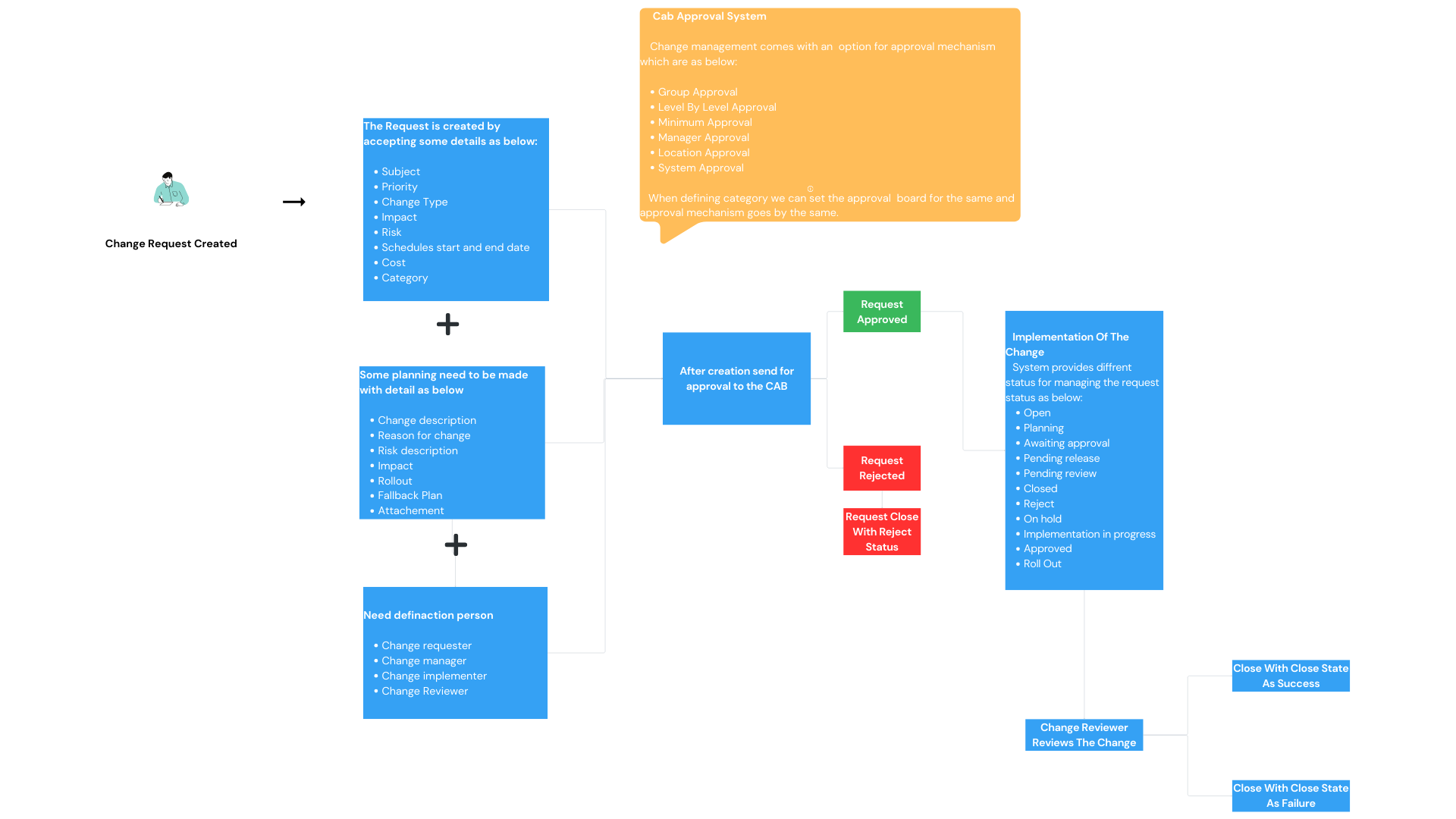
- Request for change (RFC): the requester raises a change request with description, impact and priority.
- Logging and categorization: the change manager reviews it and classifies it as standard, normal or emergency.
- Assessment and approval: risk, impact and dependencies are assessed; the change manager or the Change Advisory Board (CAB) approves or rejects.
- Planning and scheduling: a plan with rollback steps and an implementation date is prepared.
- Implementation: the change is carried out and monitored.
- Review and closure: the result is verified, documentation is updated and the request is closed.
Roles
| Role | Responsibility |
|---|---|
| Requester | Raises the change request |
| Change manager | Reviews, approves and oversees changes |
| CAB | Reviews and approves high-impact changes |
| Implementation team | Implements the change |
| Reviewer | Validates the change |
Risk, rollback and KPIs
- Risk levels: low (no major impact), medium (limited impact), high (critical system impact).
- Rollback plan: restore the previous version, revert database changes and notify stakeholders.
- KPIs: successful changes, failed changes and reasons, average approval and implementation time, and fewer incidents caused by changes.